
By Njeri Murage
There is no better addition to a safari, than sampling the local arts and crafts scene.
To travel is to sample the sights, sounds, and cuisine of a place. Exploring the local arts and crafts helps to immerse you in a place’s culture.
Like any other place globally, Africa has a diversity of unique arts and crafts that impact its culture.
Think of Central Africans with their fabric making and printing prowess, the West Africans with their incredible sculptures, South Africans with their unrivalled beadwork, not forgetting us, the East Africans with our Maasai beads, and handwoven baskets.
While this is just a broad view to give you some perspective on what to expect all around our magnificent continent, I’d like to tell you a little bit more about indigenous Kenyan crafts.
So if you’re searching or simply curious about them, here’s what you need to know.

Kenya’s material culture
Kenya has 47 ethnic communities, which all contribute to its vibrant culture.
For instance, most of the crafts in my Kikuyu community came from the Samburu, Kamba, and Maasai.
Our ancestors bartered farm produce for all sorts of utility crafts, tools, and weapons, which was also the case for many other communities.
Most Kenyan crafts, like baskets, clay pots, utensils, shields, and carvings, were often more functional and symbolic than aesthetic.
Perhaps if it weren’t for the regal Maasai, Samburu and Turkana women and even the Giriama with their ear loops, collar necklaces, belts, and textiles, our beauty and aesthetic crafts would probably be non-existent.
In particular, the Giriama had skilled iron ore artisans who produced ornaments that included bangles that sometimes doubled up as charms.
But all said and done, besides our world-famous Maasai beads that need no introduction, here are some indigenous Kenyan crafts to enjoy.

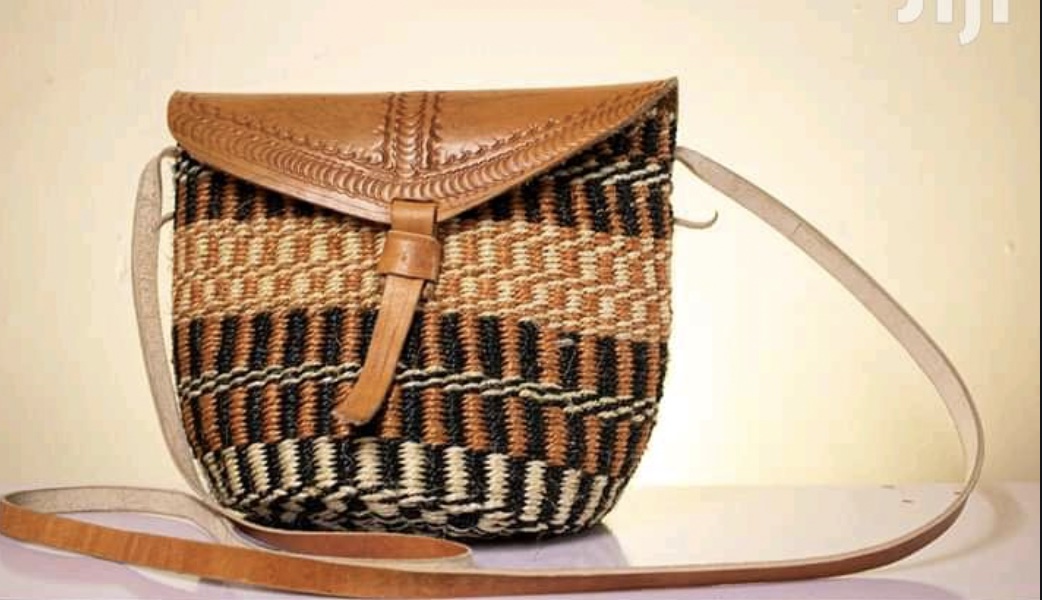
Kiondo (handwoven sisal basket)
There’s no doubt hand-woven baskets in Kenya are popular.
The kiondo, as it’s called, is a Kenyan staple skillfully woven by mainly Kamba women at Nairobi’s Kariokor Market and various women cooperatives around the country.
Like many others at the time, my grandmother used hers to harvest and store food in the granary.
We’d often find goodies like sweet ripe bananas or irio, a hearty traditional meal of maize and beans or peas mashed with potatoes, some plantain, and traditional vegetables.
Finding irio in the kiondo was always surprising, as we’d be baffled by how it stayed fresh for days on end without going bad.
The kiondo was also a traditional symbolic gift to brides representing bountiful harvests.
The kiondo, also apart from being a utility craft, has since evolved to become a home decor and fashion accessory.
Wood carvings
The first wood carving I ever saw as a child was a magnificent ebony elephant figurine in my grandfather’s living room.
It had a bright smooth exterior and carved trunk, and I couldn’t help thinking how unique it was.
Years later, I came across a hundred more at the Kenya Curios in Nairobi’s City Market.
This wasn’t unusual in the late 90s because tourism was thriving in Kenya, making it a vibrant trade with many curio shops in and around the city.
These unique wood crafts are the pioneering works of Kamba wood carvers. They make everything from carved log stools, wall hangings, sculptures, and assorted utensils and ornaments.
You can see their work at the National Museum of Kenya, Maasai market, or Wamunyu in Machakos county.

Kenya soapstone crafts
It never ceases to amaze me how incredibly creative these soapstone carvings tend to be.
Soapstone in Kenya comes from Kisii county in the country’s southwestern part. Here you’ll find the hardworking Abagusi or Kisii community who mine and carve it.
They use simple basic tools like chisels and knives to carve, then sandpaper and polish to give the items a smooth fine finish.
Back in the day, they only made utilities like bowls and baskets for their use.
Today, it’s a commercialized activity with chess boards, vases, figurines, jewellery stones, and more for the local and export market.
You can find soapstone crafts at the Maasai market and almost any curio shop in Kenya.

Clay pots of Kenya
The history of pottery in Kenya dates back thousands of years since it marked the end of hunting and gathering and the beginning of agricultural and pastoralist lifestyles.
If you’d like to learn more about this history, check out the National Museums of Kenya or the Kariandusi pre-historic site.
Old clay pots are some of the artefacts used by archaeologists to understand the history of pre-historic Kenyans and their ways of life.
Almost all Kenyan communities had clay pots; it was necessary for cooking and water or honey storage.
The pots essentially have a basic design with minimal design and beadwork because they wore purely functional.
So if you’d like the more traditional-looking earthenware type of pots, they’re available at the Maasai and Kariokor markets.
There are also dozens of Kenyan artisans and ceramists with dynamic pages on Instagram for something more contemporary.

Hand-carved beehives of the Tugen
If you’re keen on authentic honey or are into beekeeping, you’ll be impressed by the hand-carved beehives and wealth of knowledge possessed by Tugen hive crafters.
The Tugen are a sub-tribe of the larger Kalenjin community living in Baringo County within the Great Rift Valley.
These hand-carved beehives are tree trunks from select trees.
The inner part of the trunk is chopped out to leave a hollow space that’s further smoothened over several days and polished with blood from a Zebu cow and dung to attract the bees.
It’s then dried for two to three days before final installation.

Kenyan coastal arts and crafts
The Kenyan coast is rich with arts and crafts that deserve mention. It’s home to the Mijikenda, Pokomo, Sanye, Waata, Orma, Swahili, Arabs, and Indians who’ve coexisted for centuries.
The result of such coexistence was something incredible, as seen from their utilities, home decor, fashion, and architecture.
Let me not even delve into coastal cuisine, which deserves an entire article on its own.
Coastal carving is a valuable craft from the Omani Arabs that covers timber, gold, iron ore, and brass. You’ll see the evidence in their furniture, living spaces, and utilities.
Weaving, pottery, and boat building are other crafts inherent in the coastal communities.
The thing is, I’ve barely scratched the surface on indigenous Kenyan crafts. Because if you were to traverse through all of the Kenyan communities, there’s no doubt you would discover lots and lots more.

Contemporary Kenyan Crafts
While indigenous Kenyan crafts will always reign supreme, there has been some development in recent years, with an upsurge and diversification in Kenya’s contemporary crafts.
You can now find luxury leather goods like shoes, handbags, and travel bags.
Home decor from all sorts of materials like raffia, mohair, hyacinth, and seagrass.
Fashion accessories and jewellery from brass, glass, wood, and gold. Unique furniture pieces that can hold their own anywhere in the world.
Yes, the Kenyan crafts scene is vibrant, inexhaustible, and unforgettable. Your Kenyan safari experience deserves a touch of it and will probably be the better for it.
Just in case you’d like to view or source some contemporary Kenyan crafts, visit Lucidity Artisanals Shop, our online market for handmade crafts (in) Kenya.
Enjoy your safari, and good luck!

About Njeri Murage
My greatest passion is beautiful crafts, design, and decor. Nothing excites or adds a spring to my step like they do.
Outside of this, I’m committed to promoting craft skills through mentorship, training, and internships. I’m also trying to learn Turkish; hopefully, I’ll be fluent someday soon.
My socials are terrible, but you can always reach me here – njeri@lucidityartisanals.shop for anything on Kenya handmade decor.
Further Reading
Where to shop in Nairobi – the best Nairobi shopping
Kenya Clothes – 14 designers to watch out for
Where to shop for crafts and curios in Nairobi
Book Your Kenya Trip – Insider Tips
Find everything you need for visiting Kenya on my TRAVEL RESOURCES page.
Find everything you need for moving to Kenya in my THE EXPAT GUIDE TO LIVING IN NAIROBI book.
- Kenya Accommodation: Booking.com has the cheapest rates for hotels and guest houses in Kenya.
- Accommodation Reviews: TripAdvisor is my go-to portal for checking reviews on accommodation/restaurants in the local area. I never book without checking TripAdvisor first.
- ESIM: Airalo allows you to access the Internet from virtually any country without paying roaming charges
- Car Rental: Rental Cars is managed by Booking.com – guaranteed reliable.
- Tours and Guides in Kenya : Check out Get Your Guide and Viator – reputable companies that do tours within Kenya and East Africa.
- Travel Insurance: Travel insurance will protect you against illness, injury, theft, and cancellations. I recommend Visitors Coverage, which covers you for East Africa and offers ‘special insurance’ for safaris and adventure sports:
- Visitors Coverage
- Compensair – if you have a cancelled or delayed flight, you may get a refund.