
Eco travel Africa is a fast growing and integral part of Africa’s mission to preserve its fragile wildlife and natural beauty. Eco travel in Africa is a relatively new kid on the block. As recently as the 1980’s Africa’s indigenous wildlife was severely threatened from over hunting, poaching and human – wildlife conflicts with local communities. With many species on the brink of extinction, groups began to explore ways to mitigate these circumstances and protect their ecosystems and wildlife.
Eco travel in Africa began with eco safari’s – wildlife trips that served to educate people about regional ecosystems and help them to understand how they could help to preserve endangered species. Eco education also seeks to teach local communities about the impact that their actions have on the environment.

As the need to protect endangered species grew, so too did the number and size of parks and conservancies. Vast tracts of land were taken from local people. Tribes, such as the Maasai in Kenya, who had grazed their cattle nomadically for centuries suddenly saw traditional lands taken away from them. Farmers who saw marauding elephants eating their crops and lions eating their cattle as pests, were now not allowed to kill them. For many of the people of Africa, wildlife conservation goes against their best interests. Eco tourism seeks a way to preserve the natural ecosystem that will benefit local people. In this way eco tourism differs from nature tourism in that it works to benefit animals and communities as a whole.
African ecotourism is essential for the local economy – many parks and conservancies throughout Africa couldn’t operate without vital tourist money. Sensitive and sustainable tourism often funds the conservation of wildlife and gives back to the communities.
Sadly as COVID-19 has driven all tourism to a halt it’s these very communities that are suffering. Conservancies and camps have no money to pay stipends to the communities that use the land. Other benefits brought through tourism such as the money paid to guides or for local crafts has disappeared. The Maasai, as many tribes and communities all over Africa, have lost a bulk of their livelihood. This in turn presents a danger to wildlife, as motivation to protect them is decreased and the incentives for poaching become more attractive. For this reason, when planning a trip after lock down, please consider some of the Eco safari resorts across the African continent

What can the Eco tourist in Africa expect?
If you choose an eco safari then you can expect an experience beyond the simple viewing of animals. Eco safari’s offer the chance for you to learn whilst travelling, putting heavy importance on educating visitors on the local animals and communities. Many eco safari’s in Africa will offer specialist speakers, tours and courses on the local environment.
Eco resorts across Africa are built to be environmentally friendly. This should include using local materials for the buildings, and locally grown food. Many eco resorts and camps have a comprehensive environmental policies, showing commitment towards pollution prevention, protecting the ecosystem and natural resources and community empowerment.

How to book an eco travel Africa
There are a number of websites and tour companies dedicated to eco travel Africa. If you have your eye on a specific camp then a search on their website should detail their environmental and conservation policies. Look for things like:
• efficiency in water and energy use
• responsible waste management
• compliance with legislations
• sensitization of staff and clients
• expansion of ecosystem area under management
• Monitoring and continued improvement of the set environmental targets.
The below camps and destinations are all proudly eco-forward.
- Ankazoberavina, Madagascar
- Mushroom Farm, Malawi
- Casamance, Senegal
- Cape Winelands, South Africa
- Sao Tome and Principe
- Okavango Delta, Botswana
- Ol Pejeta, Kenya
- Etosha National Park,Namibia
- Nuarro Lodge, Mozambique
- Cape Verde Islands
- Phinda, South Africa
- Mowani Mountain Camp, Namibia
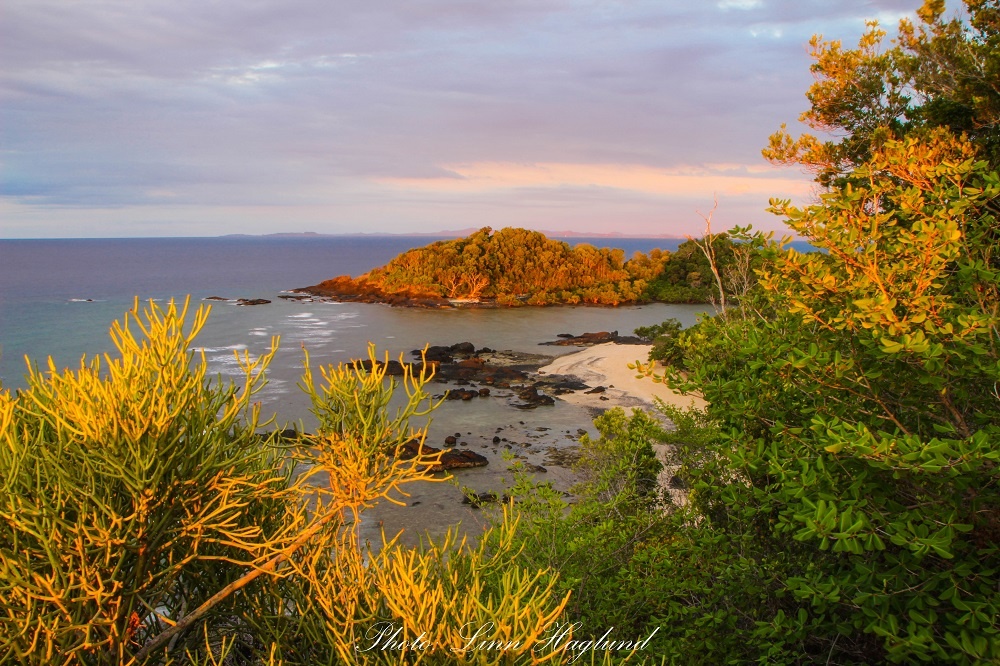
Eco travel Ankazoberavina, Madagascar
Ankazoberavina is a tiny island north of Madagascar, only an hour’s boat ride from Nosy Be. It is privately owned and houses a sole eco-lodge run by Max, an Italian that has lived most of his life in Madagascar. Not only is the volcanic island adorable, with its good blend of thick jungle, a pristine beach, natural pools, and stunning snorkeling. It’s also a hotspot for wildlife in Madagascar with a nesting spot for sea turtles, two lemur families, and baby sharks seeking shelter in the mangroves before they get big enough to venture out in the big blue.
The eco-lodge offers boat tours to nearby paradisiac islands, snorkeling, and scuba diving tours as well as whale watching tours and the possibility to swim with whale sharks in the season (without the crowds!). All their activities are ethical and they take highly care of the wildlife that the islands and waters hold. You are guaranteed to be educated in ethical animal tourism when you visit.
Contributed by Linn Haglund of Brainy Backpackers
Mushroom Farm, Malawi
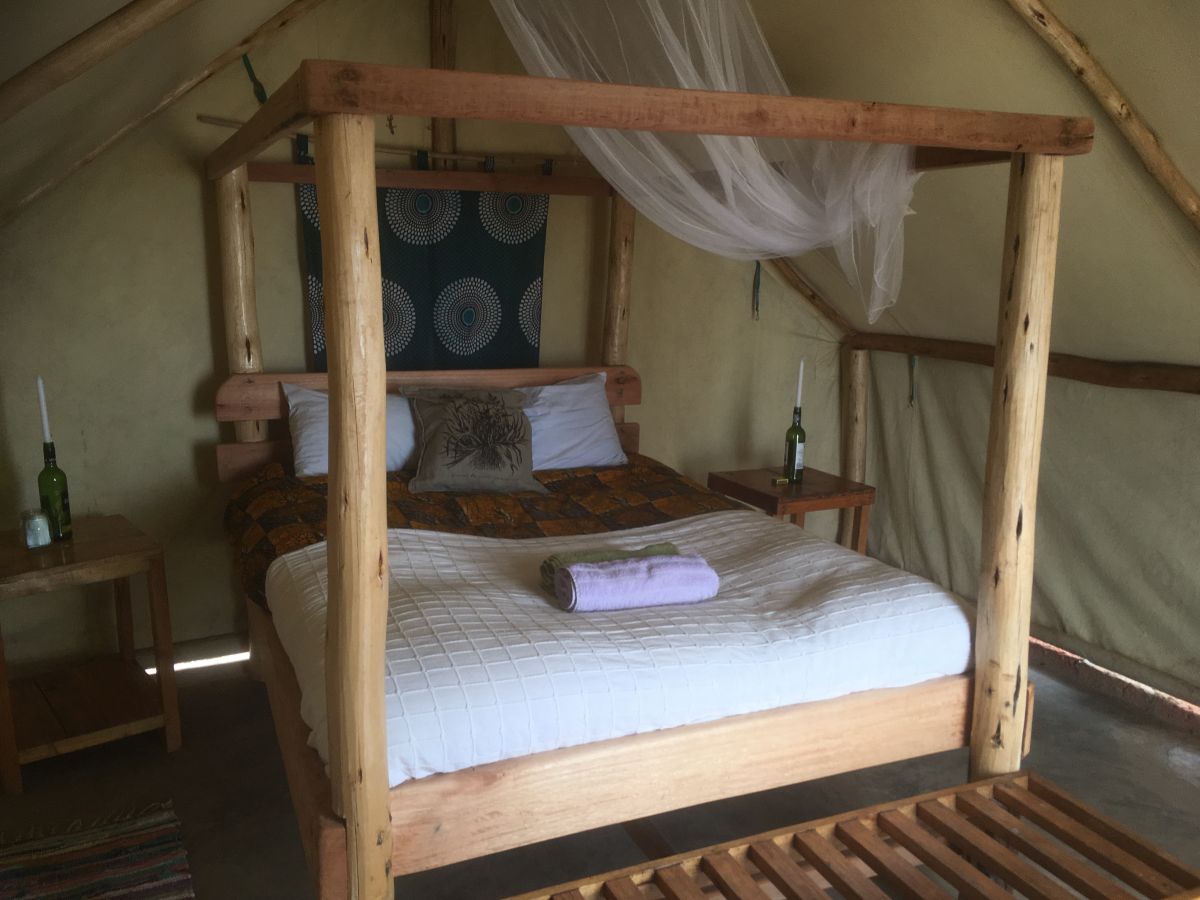
If you are looking for a truly eco-friendly place to stay in beautiful surroundings, and you don’t mind traveling along a very bumpy African road to get there, then the Mushroom Farm Eco Lodge is an ideal choice. Located just outside of Livingstonia, a small town perched on the Rift Valley Escarpment above Lake Malawi, the Mushroom Farm is the perfect place to escape from the modern world and get back to nature.
It’s an eco travel Africa destination, completely off-grid and there is no WiFi, so you’ll be on a digital detox while you’re here. A variety of types of accommodation are available, including safari tents, cob houses and a treehouse. All are built using sustainability principles and are quite affordable and comfortable, though not luxurious.
The on-site vegetarian restaurant serves some of the best food in Malawi, and the views from the open-air dining room are spectacular. A portion of all revenues from the lodge goes towards projects to help the local community, including a nursery school and an adult literacy program. The lodge also employs local youth as guides, who you can hire to take you on short hikes around the area.
Contributed by Wendy Werneth of The Nomadic Vegan
STAY AT MUSHROOM FARM ECO LODGE
Eco travel Africa in Casamance, Senegal
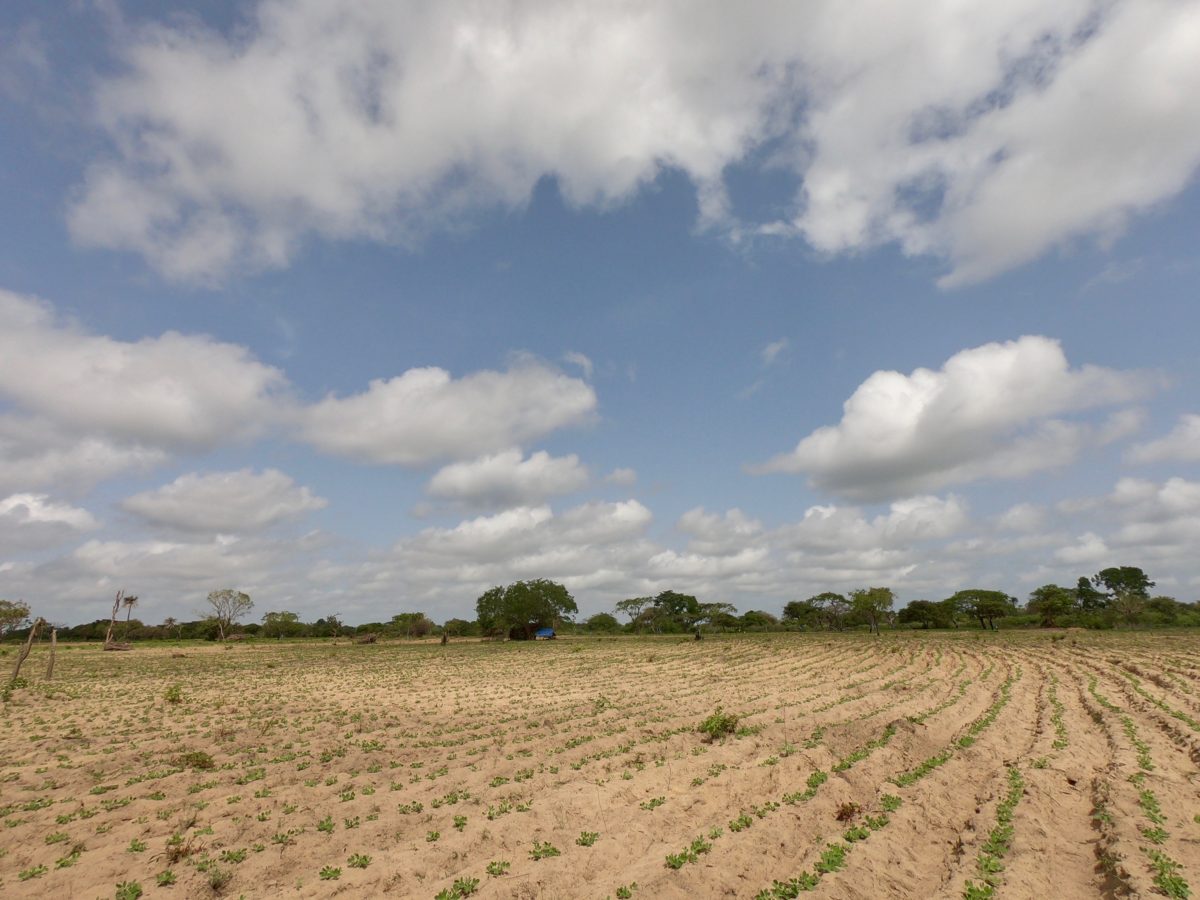
When I think of nature I always think of Casamance, the southernmost region of Senegal. Divided from the rest of the country by the Gambia, it has seen much less urbanisation and the long civil war has halted development. This led to a region remained almost untouched by tourism, if we exclude the tourist spot of Cap Skirring on the coast, most of the interior of the region is as pristine as it could be. There are some very nice local companies organising environmental friendly tours of Casamance in very different means of transport. My favourite has been a three-day bicycle trip in the forest, sleeping at local campements and eating great local food as the thieboudienne or the yassa. Needless to say that the views are wonderful, especially in those areas where the forest meets the large river and creates a beautiful blue-and-green background. If you visit Senegal, Casamance should definitely be on your itinerary!
Contributed by Mario Magliore from Rest and Recuperation
STAY AT KHELKOM LODGE CASAMANCE
Eco tourism in the Cape Winelands, South Africa
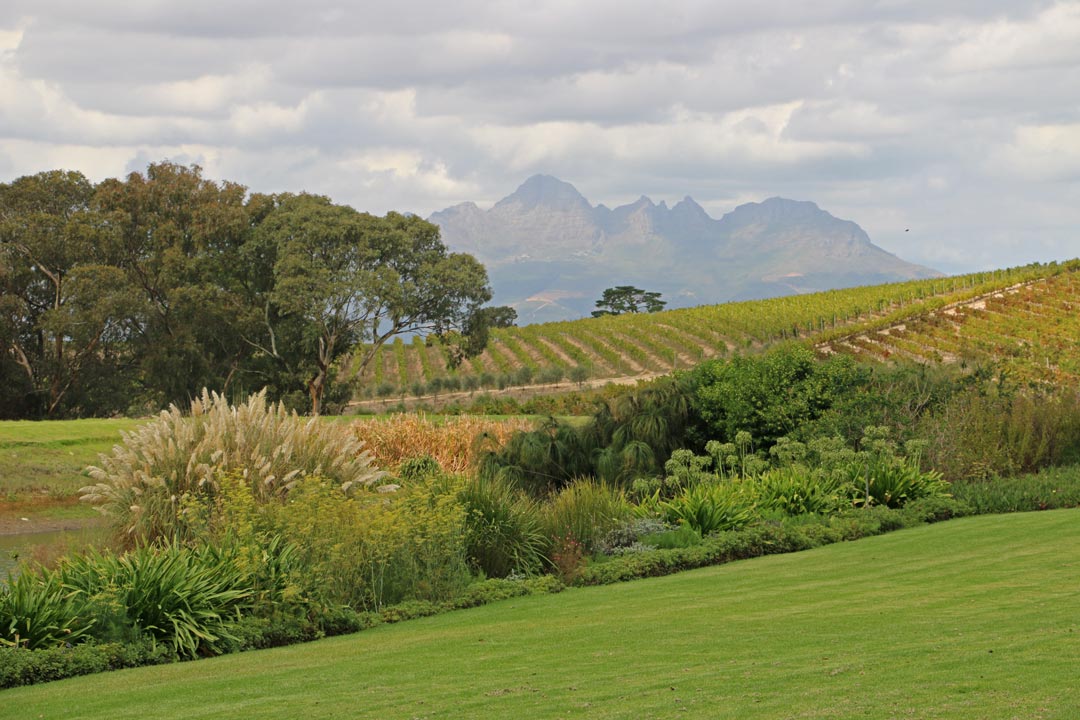
Ecotourism in the Cape Winelands of South Africa is an industry growing at a rapid rate. The wine estates around Stellenbosch and Cape Town cover some of the most beautiful locations at the tip of Africa. Sustainable winemaking practices and eco tours such as hiking and estate tours cater for holiday makers in the natural environment without disturbing habitats. These eco tourism practices allow tourists to visit the fragile, pristine natural areas with a relatively low impact. Organic wine is made without the use of artificial pesticides, fungicides, herbicides etc. with natural alternatives. The process starts in the vineyard where viticulturists can promote growth and fight disease using naturally occurring products. The winemaker continues with organic practices in the cellar by also avoiding prohibited additives.
There are some excellent organically produced wines to go and taste at several estates, the farms Avondale and Reyneke are some of the leaders of the pack. Go and enjoy the fresh air and beautiful views of mountains with spectacular hikes on the wine farms Jordan, Zevenwacht, Thelema or Lourensford. During the Wellington wine walk guides will walk with you on numerous trails in and around the wine farms of the Cape teaching you about the wines and biodiversity of the area. Spier wine farm with top hotels, restaurants and a conference center attempts to make a difference through community projects and practicing responsible and sustainable farming on a large scale. The Spier eagle encounters is an eco tourism Africa initiative not to be missed. Visitors get the opportunity to interact up close, one-on-one with raptors and endangered species. Fund obtained here is crucial for animal conservation, rehabilitation and education in the area.
Contributed by Campbell and Alya from Stingy Nomads
STAY AT WILD MUSHROOM COUNTRY HOUSE STELLENBOSCH
Eco Tourism in Sao Tome and Principe
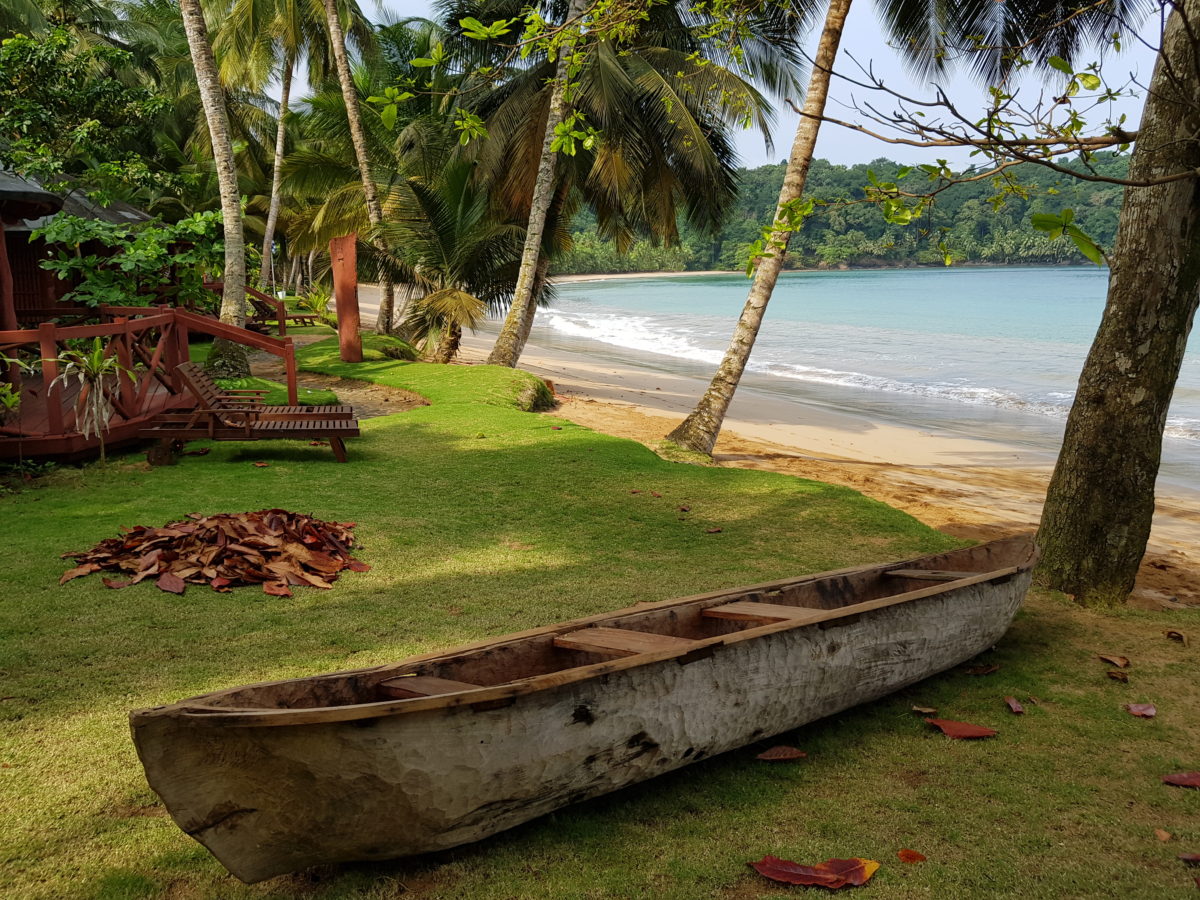
Sao Tome and Principe is a tiny island nation off the coast of west Africa in the Gulf of Guinea. Few people have heard of it, but those who venture to these distant shores are treated to a verdant volcanic world where tourism and sustainability live happily side by side. The lush jungle interiors are punctuated with towering rock pinnacles that beckon adventure, whilst the rocky black coastline gives way to secluded sandy beaches lined with coconut palms. The islanders are proud of their heritage and environment and are very aware that it’s the pristine nature that draws visitors. Therefore, there’s a real desire to make sure human impact is minimal and any development isn’t detrimental to the landscape or local communities living here. The few hotels here are conscious of their environmental footprint, and operate as sustainably as possible, using local materials, local employees and cooking up fresh fish that has been line-caught straight from the ocean.
Bom Bom Resort is a prime example of how tourism and nature can coexist, and is one of the best places to stay in Sao Tome and Principe. Rustic wooden cabins sit just footsteps from the deserted beach, and the laid-back pace of life is what the island is all about. By day guests swim, snorkel and take boat trips, whilst in the evening it’s time to head across the walkway to a tiny islet for candlelit dinners over the ocean.
Contributed by Heather Cole from Conversant Traveller
STAY AT BOM BOM RESORT IN SAO TOME AND PRINCIPE
Eco Travel Africa, Okavango Delta
The Okavango Delta is a beautiful oasis in the middle of the Kalahari desert. Located in the center of Botswana, it is the world’s largest inland delta. The river water and lush green nature attracts a myriad of wildlife to this area, so it should go without saying that it is very important to protect this extremely vulnerable ecosystem.
One of many interesting facts to know about Botswana is their high price, low impact tourism strategy. This focus on luxury tourism is considered better for the surrounding natural environment.
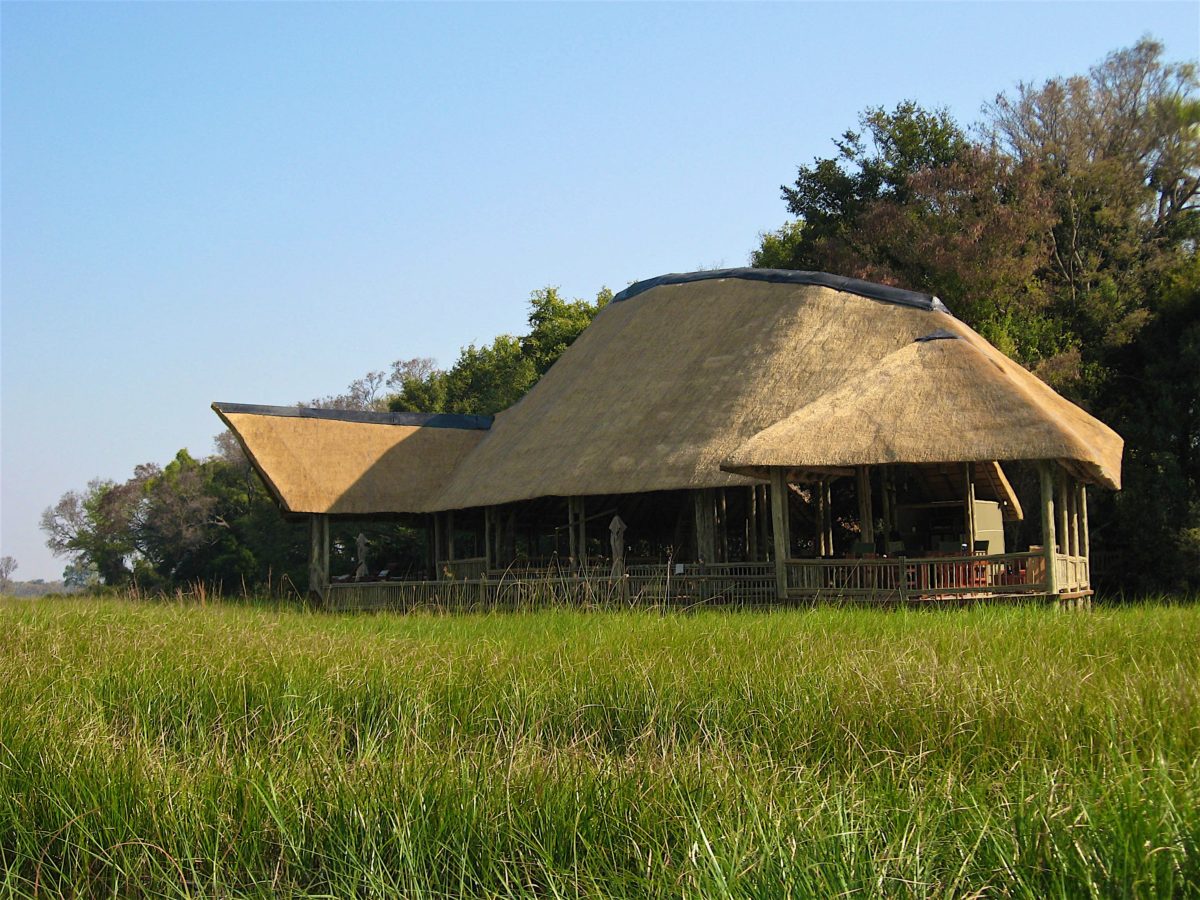
Moremi Crossing is one of those eco travel Africa, luxury lodges that is built respecting the surrounding nature and wildlife. The lodge is located in the middle of the Okavango Delta on the banks of the Boro river overlooking the southern end of Chief’s Island. They are an eco friendly tented camp which is run exclusively on solar power electricity, including hot water, thereby leaving a minimal ecological footprint.
The main lodge area as well as all the tents are built with respect to the natural surroundings in that there are no fences, so wildlife can freely roam throughout their natural habitat. Elephants stroll into the camp at all hours to eat the fruits and leaves of their favourite trees, hippo’s waddle in at night to graze the green grass together with other wildlife such as various antelopes.
This particular setup is a shining example of how humans and animals can in fact live in perfect harmony.
Contributed by Sabine from The Travelling Chilli

Eco safari Africa at Ol Pejeta, Kenya
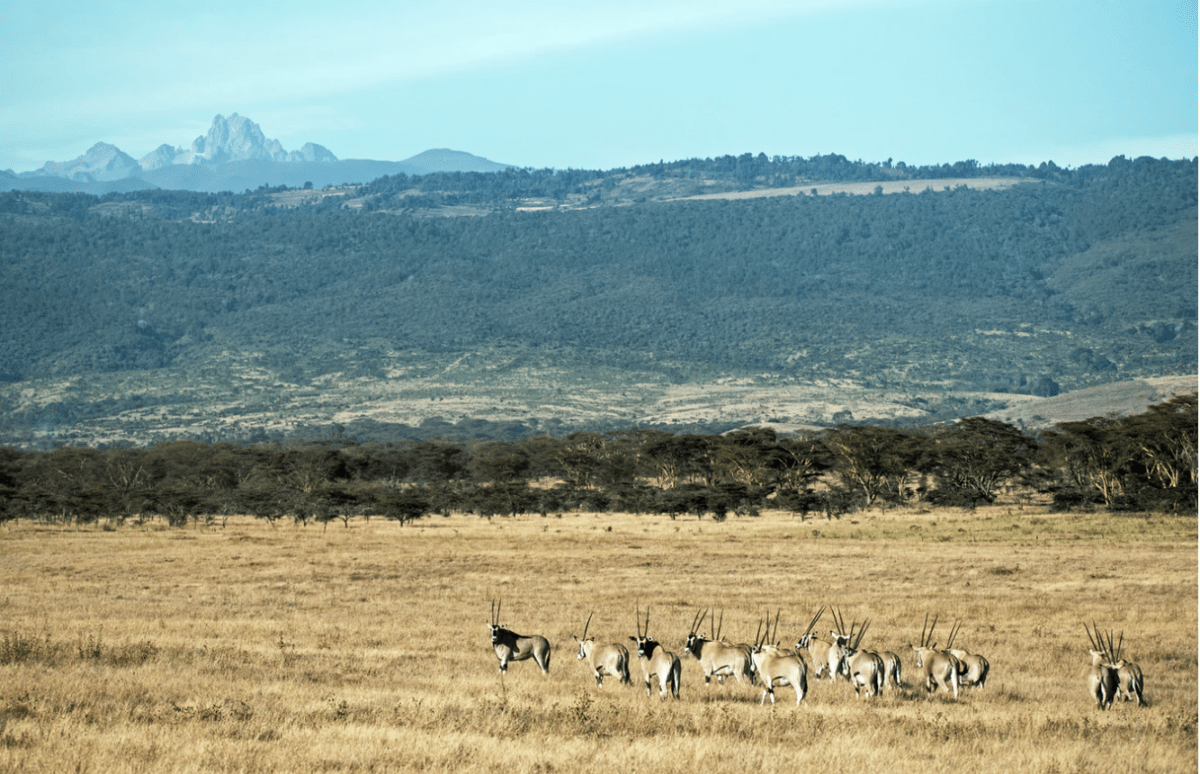
Ol Pejeta is one of Kenya’s foremost eco travel safari destinations. Sheltered under the watchful gaze of Africa’s second highest mountain, Mount Kenya. Ol Pejeta is famed for its conservation efforts. Home to the only two Northern White Rhino’s in the world. Both the remaining rhinos are female, sadly the last male in existence died last year at Ol Pejeta. They are now currently trying bring the Northern While Rhino back from extinction through a fertilisation programme. Ol Pejeta has the only chimpanzees in Kenya, in the exceptional Sanctuary. It is one of the top safari destinations in Kenya, with all the Big 5, an abundance of elephants and majestic views of Mount Kenya’s snowy peaks and the Laikipia plains.
STAY AT SWEETWATERS SERENA CAMP IN OLD PEJETA
Eco safari at Etosha National Park, Namibia
Etosha National Park, part of our 2-week self-drive safari in Namibia, is, like many wildlife and conservation areas, acutely aware of its need for sustainable and responsible tourism and especially as regards to eco-tourism. Namibia is prone to droughts and so water conservation is incredibly important not only inside the parks but also to the lodges around its edges. The park is incredibly strict on everything from silence around the watering holes in an attempt to minimise intrusion on the animals to its zero-tolerance approach to littering, leaving your vehicle and feeding wild animals. The beautiful thing about Etosha is that the people that live and work there clearly care so deeply about the land that gives them employment that they all understand the importance of preserving it. Most people abide by the rules because they are decent human beings but the guides also take such pride in their jobs that they do not hesitate to call someone out for stepping out of line. It really feels like everything associated with the park is geared around how to co-exist peacefully with nature. This is a perfect Eco Travel Africa destination.
Contributed by Emma Morrell from Wanderlust and Wet Wipes
STAY IN ETOSHA VILLAGE, ETOSHA NATIONAL PARK

Nuarro Lodge, Mozambique
Nuarro Lodge, beautifully built into the landscape of Nanatha bay in Mozambique, is a pioneering eco travel Africa destination that caters for both relaxation and adventure seekers.
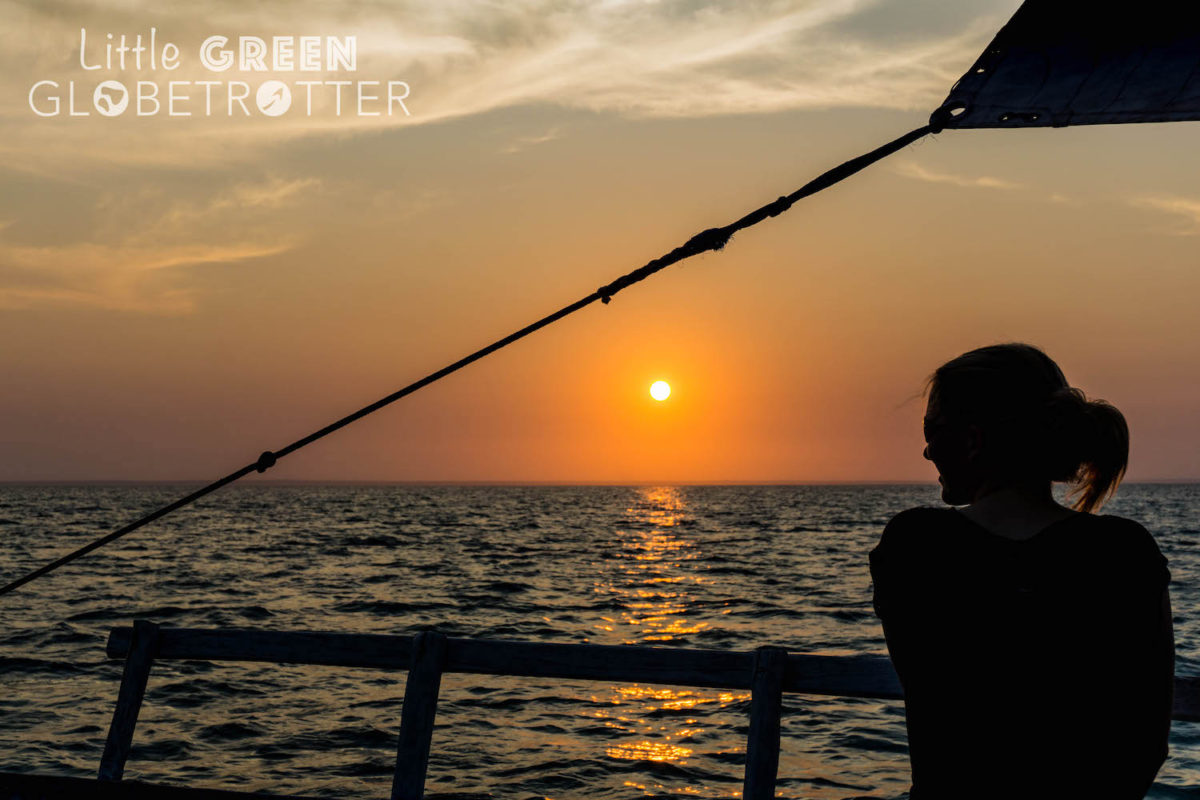
Located right on the beach, the warm, clear waters of the Indian Ocean are the life of the lodge. The nearby reef ensures magical diving and snorkelling, and during the months of July through November, pregnant humpbacks come here to birth their calves. Kayaking, paddle boarding, beach-side yoga and sailing in a traditional dhow are also on offer, sure to entice those drawn to the ocean. For guests who prefer to keep their feet on dry land, mountain biking, bird watching and bush drives introduce visitors to local flora and fauna, and a cultural tour of the village allows a glimpse into life here.
Nuarro’s owners established a charity to fund projects for the community, including the building and provision of a medical centre, school and community centre. Look out for these on the village tour! Nuarro employs local staff and a portion of all the room and activity rates go to the local community. In addition, the lodge generates all its own electricity and clean water with renewable energy, and its design and construction clearly held sustainability and environmental impact at its core. There are accommodation options suitable for a range of budgets and meals are local, fresh and totally delicious! If you’re looking for eco options while travelling in Mozambique, Nuarro should definitely be on your itinerary!
Contributed by Joss Hooren from Little Green GlobeTrotter
Eco Tourism Africa Islands, Cape Verde
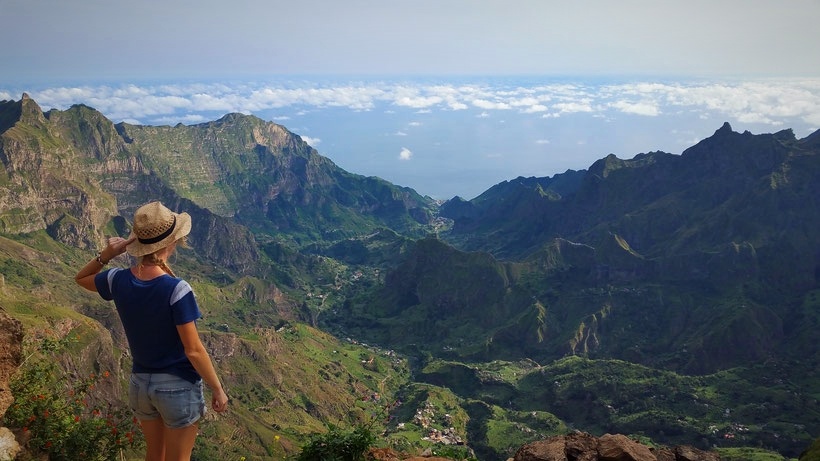
If you are looking for a great eco travel destination in Africa, you should definitely consider the islands of Cape Verde. First, you need to know that two of the archipelago located in the heart of the Atlantic are dedicated to mass tourism. I am talking about Sal and Boa Vista. However, the remaining 8 islands are completely dedicated to eco-tourism since you can only find small and local businesses here. The islands that are probably suited the best for eco-travel are the islands of Fogo and Santo Antao. Both islands boast gorgeous hiking trails and you can easily spend your entire holiday hiking around.
If you want to include a beach to your holidays too, then I strongly recommend Maio island and/or Sao Nicolau island. Both have gorgeous, pristine beaches and are managed only by the local community. No large resorts here!
The Cape Verdean islands are still not very explored and it’s perfect if you want to avoid the crowds. If you want to plan your holiday in advance, make sure to consider the Cape Verde travel guide.
Contributed by Paulina from Paulina on the Road
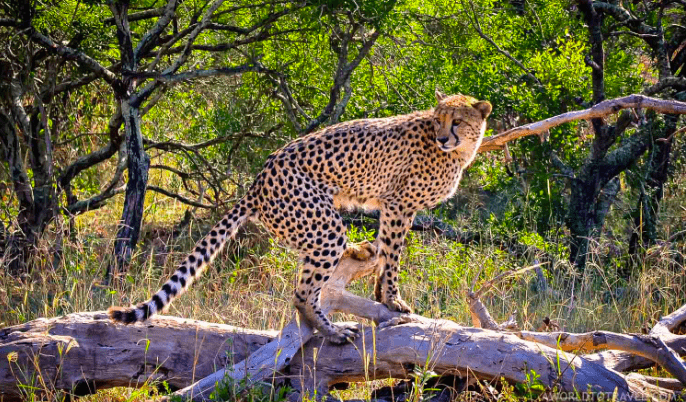
Phinda, South Africa – Eco Travel Africa
On the luxury side of things, Phinda is a 170 km² private game reserve where you can enjoy the privacy of your own lodge and take as many safari rides in their protected wildlife land as you want during your stay. I visited Phinda in 2015 as a hosted blogger and loved every minute of my stay as they made it pretty unique. Located in KwaZulu Natal and managed by the &Beyond group, which has other ecotourism properties and different types of glamping all over the world, it offers way more than just day and night safari rides. Among others, you can learn from their conservation team on sustainability and wildlife topics, take part in community and cultural experiences, ocean adventures, and explore the South African bush on foot with experienced and knowledgeable guides. They also offer special packages for family fun stays and destination weddings. Who wouldn’t like to tie the knot in such a stunning spot?
Contribute by Inma,from A World to Travel
Mowani Mountain Camp, Namibia
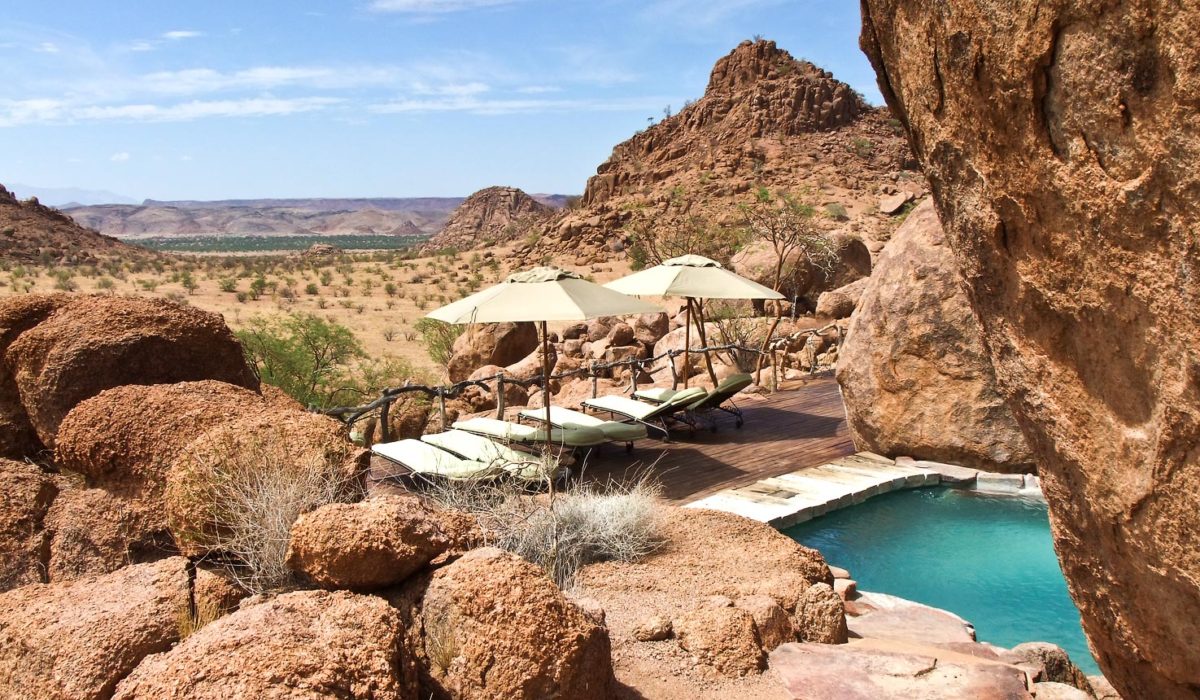
Mowani Mountain Camp is a luxury lodge with an eco-focus, located deep in remote Damaraland in Northern Namibia. The drive to the lodge is itself an incredible experience – guaranteed to take hours wherever your starting point – through epic African desert scenery of huge red rocks, sand dunes, and gravel.
The lodge is designed with the environment in mind, built in between enormous granite boulders (with great sundowner drinks and views at the top each evening!), and its high roof and ventilation optimising climate control without the need for aircon. Dining is alfresco, and the individual luxury tented and thatched accommodations come with en-suite outdoor bathrooms with breath-taking views across the desert.
Sustainable eco travel Africa and community improvement are core values at Mowani. The mantra is ‘reduce, reuse and recycle’ for all refuse, and solar geysers are used to reduce the carbon footprint. They have a tree planting project to preserve the desert environment, harvesting and replanting indigenous trees around the lodge and waterhole. There’s also space given to a community vegetable garden, so as to be able to purchase organic crops from the local community.
Game drives offered in the conservancy have guides from the local tribes to help track mountain zebra, kudu and oryx, and if you’re extremely lucky, the famous (but elusive and critically endangered) desert-adapted elephants, lions and giraffe that call this part of Namibia home.
Contributed by Ed Gold at SafarisAfricana.com
Book Your Kenya Trip – Insider Tips
Find everything you need for visiting Kenya on my TRAVEL RESOURCES page.
Find everything you need for moving to Kenya in my THE EXPAT GUIDE TO LIVING IN NAIROBI book.
- Kenya Accommodation: Booking.com has the cheapest rates for hotels and guest houses in Kenya.
- Accommodation Reviews: TripAdvisor is my go-to portal for checking reviews on accommodation/restaurants in the local area. I never book without checking TripAdvisor first.
- ESIM: Airalo allows you to access the Internet from virtually any country without paying roaming charges
- Car Rental: Rental Cars is managed by Booking.com – guaranteed reliable.
- Tours and Guides in Kenya : Check out Get Your Guide and Viator – reputable companies that do tours within Kenya and East Africa.
- Travel Insurance: Travel insurance will protect you against illness, injury, theft, and cancellations. I recommend Visitors Coverage, which covers you for East Africa and offers ‘special insurance’ for safaris and adventure sports:
- Visitors Coverage
- Compensair – if you have a cancelled or delayed flight, you may get a refund.
Pingback: Naibor Camp – Best Masai Mara Camps Review | Live Travel Kenya
Pingback: Naibor Camp – Best Masai Mara Camps Review | The Expat Mummy
Pingback: Lake Elementaita Camping - 5 best campsites | The Expat Mummy
Pingback: A story about always wanting more and finding happiness. | The Expat Mummy