
This morning I read a Mumsnet thread, it was about if we are becoming too overprotective of our children. This is a subject I find really interesting. Not so long ago I would definitely have put myself in the overprotective mother category. Then at Christmas we took a trip back to England and I was gobsmacked at how controlling the system has become in the 6 years since I’ve left home. The word nanny state may have been chucked around a few times. At the same time I read a study from the University of Westminster shows that parents in the UK are the most protective in the whole of Europe. I ask myself is this obsessiveness with safety helping out children or robbing them of their independence?
How do children learn, if they aren’t allowed to do
It’s a given that no mother ever wants her child hurt but does protectiveness come at a price? If we
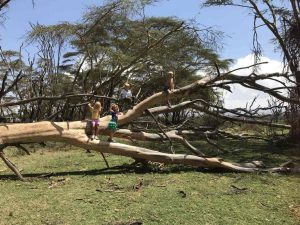 wrap our children in cotton wool then what lessons are we teaching them. How will they learn what will hurt and what wont? How will they learn to protect themselves when the grow up? If it is human nature to learn by doing… what are they learning if we don’t let them do anything.
The Mumsnet group (who is a UK-based group) were firmly in the overprotective camp. The general consensus being that times had changed and it was no longer safe to let our kids wander the streets unattended. But the issue of over protectiveness isn’t all about the merits of allowing your kids out from dawn till dusk. Overprotectiveness comes in all forms and it’s not just the parents either.
Overprotectiveness in the UK: playgrounds
In the UK there is a thick handbook, oft reviewed, which is sent to manufacturers of playgrounds. It contains an incredibly detailed set of guidelines on how materials must be manufactured. In doing so ensuring that there is absolutely no chance of fun adventure harm. The result is that we take away most the risk and remove the fun. But as we turn one of our children’s few physical outlets into boring cookie cutter spaces, what effect does this have on them?
Children’s need for danger and excitement
In Norway a study was done by Sandster, which looked at exactly this. The conclusion:
“Children,have a sensory need to taste danger and excitement; this doesn’t mean that what they do has to actually be dangerous, only that they feel they are taking a great risk. That scares them, but then they overcome the fear. By engaging in risky play, children are effectively subjecting themselves to a form of exposure therapy, in which they force themselves to do the thing they’re afraid of in order to overcome their fear. But if they never go through that process, the fear can turn into a phobia. Paradoxically, our fear of children being harmed, mostly in minor ways, may result in more fearful children and increased levels of psychopathology.”
It’s something to think about isn’t it. We learn through risk taking, so if we take away all the risk what kind of humans are we creating? Social learning theory argues that children’s real-life experiences and exposures directly or indirectly shape behaviour. By reducing those experiences we are shaping their behaviours as adults
The nanny state
Much of this overprotectiveness is down to societal changes. Fear of financial repercussions mean companies are unwilling to leave anything to chance anymore. In my trip back home, I coudn’t turn around for a safety notice, barrier or railing. In addition the law constantly evolves to further protect our children. Car seats are a legal requirement till kids are 12. I tried to drive my child 100 yards down the street without a car seat and my entire UK family nearly had a fit. But legalities aside most of the overprotectiveness will come from parents themselves.
Parents as protectors
I’ve already stated that I’m in the Permissive or Helicopter parenting category. As an anxious person that overly worries, letting my children go is hard to do. But the evidence to do so is overwhelming. In the book The Overprotective Child, Cossetino states”
“Parents who overprotect their child to the extreme can prevent their child from acquiring the basic fundamental skills of life. As a result, the child can become emotionally handicapped and rely on his or her parent throughout their life”
A while ago I went to a talk at my child’s school where the teacher spoke about the three types of parenting styles. He spent a long time poking fun at helicopter parenting, to much laughter from the crowd assembled. I laughed too, even as I cringed inside. Because I’m that mum that carries the kids bags. That hovers concernedly at the playground if my kids don’t meet a friend straight away. That wrings my hands in fear if they climb too high in a tree. It was pretty mortifying to realise I am so transparent, but the best thing about that talk was that I was able to recognise what kind of parent I am. And then I could try to take steps to change.
Three types of parenting styles

-
Authoritarian – a parents-know-best approach that emphasizes obedience.
-
Permissive or Helicopter – close involvement in a child’s interests and hobbies. Provides few behavioral guidelines because parents don’t want to upset their children.
-
Authoritative – blends a caring tone with structure and consistent
All three styles lead to over protectiveness.The child who spends all their free time studying. The child whose every afternoon is booked up with play dates or extra curricular activities. Or the child who cannot visit the playground without Mummy. These are children who aren’t allowed to just BE. To be children, to be adventurous. To be bored.
Boredom
Boredom is integral to the health and mental being of everyone, children and adults alike. We need time to switch off, daydream and process the days events. We need time to work out who we are and what we want to do. The child that spends all afternoon watching TV isn’t required to think or learn. TV doesn’t fuel the imagination, nearly as much as an afternoon spent colouring or playing Lego. Or smashing up a box or doing pretend play with their siblings. Children need to be allowed to be children.
But should we let our kids walk to school alone?
Finally back to that Mumsnet topic. Why do we no longer allow our kids out all day without a protector and why don’t we let them walk to school? Are we being ridiculous? I don’t think so. It’s true that society has changed. There is more traffic and hazards on the roads. More people have cars which means families live further away from schools and walking isn’t an option. People work longer hours which means communities are less cohesive and neighbours less likely to know each other. Which also means there are less eyes looking out for your children if you let them play on the street or walk to a friend’s house. These are real and viable factors and personally I think parents are right to consider them. Where I live there is no way, I’d let my kids walk to school even if it wasn’t 7km away. But just because you don’t live opposite school, it doesn’t mean there aren’t a million other ways to allow our children the freedom they so desperately need.
Freedom
There is such value in allowing your children as much freedom as possible. Instead of after school activities take them to the woods and let them muck about with sticks and mud. If you’ve organised a playdate let them build camps and have pillow fights. Even if stuck inside on a rainy day. Do they really need all those toys? Give them a cardboard box to play with, paper and pens to draw with, pennies to count, stones to paint or damn it, let them go out in the rain and get wet. Alternatively give them nothing at all and see what they can do all by themselves when allowed to be bored.
Be the change you want to see
In conclusion, we can’t stop progression and legislation which are ‘helpfully’ put in place to protect our children. And we can’t all move to a rural village to find a different pace of life. There are lots of things we can’t do but so many things we can. Kids do more things for themselves, even if that’s chores at home. We can give kids more free time to do nothing, even if it means more whining. We can let kids fight and fall and get hurt… after all what is childhood without a few scrapes and bruises now and again. Most of all we can take a look in the mirror and try to understand if our actions are actually helpful or harmful to our children in the long run. And then do something about it.
Links you might like
Parenting outcomes
Pingback: What to pack for Kenya safari | The Expat Mummy