
Tsavo National Park, one of Kenya’s largest and most famous parks, is divided into two parts: Tsavo East National Park and Tsavo West National Park.
Named after the Tsavo River, Tsavo National Park Kenya is a huge 22.000 sq.km of red soil and volcanic wilderness known for its biodiversity. The two parks boast over 500 bird species, all the Big Five elephants, lions, rhinos, leopards, and buffalo, and a host of other mammals. Incidentally, Tsavo West National Park is the only place I’ve seen Wild Dog in Kenya.
History buffs will know the name Tsavo National Park for its infamous “man-eaters of Tsavo” two lions that terrorised railway workers building the train line from Mombasa to Nairobi in the late 19th Century, although today the Tsavo National Park lions now only occasionally put a man on the menu.
Tsavo National Park is a HUGE area often populated with thick bush and for this reason, it is often harder to spot game here than other safari destinations, like the Maasai Mara and Amboseli. Tsavo National Park is a sum of all its parts and you’d be missing out if you went there just for the animals. The beauty of Tsavo is, well, is the beauty. A Kenyan safari destination that is as raw and rugged as any of your ‘Out of Africa’ dreams, a true place of shimmering heat, jagged rocks and towering volcanoes.
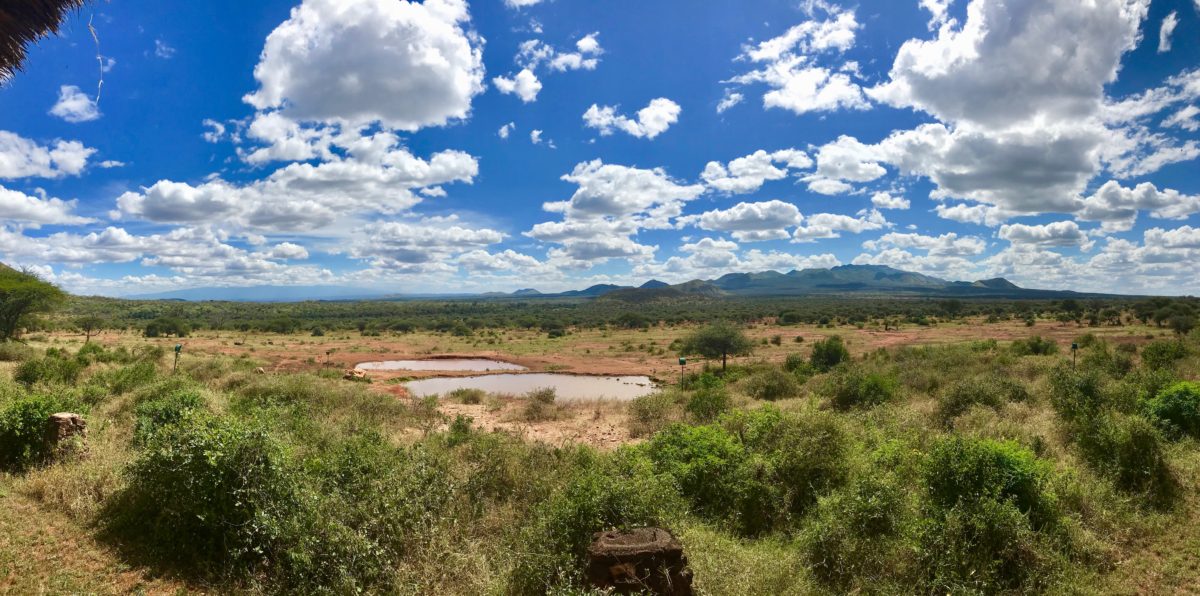
Tsavo East National Park Kenya
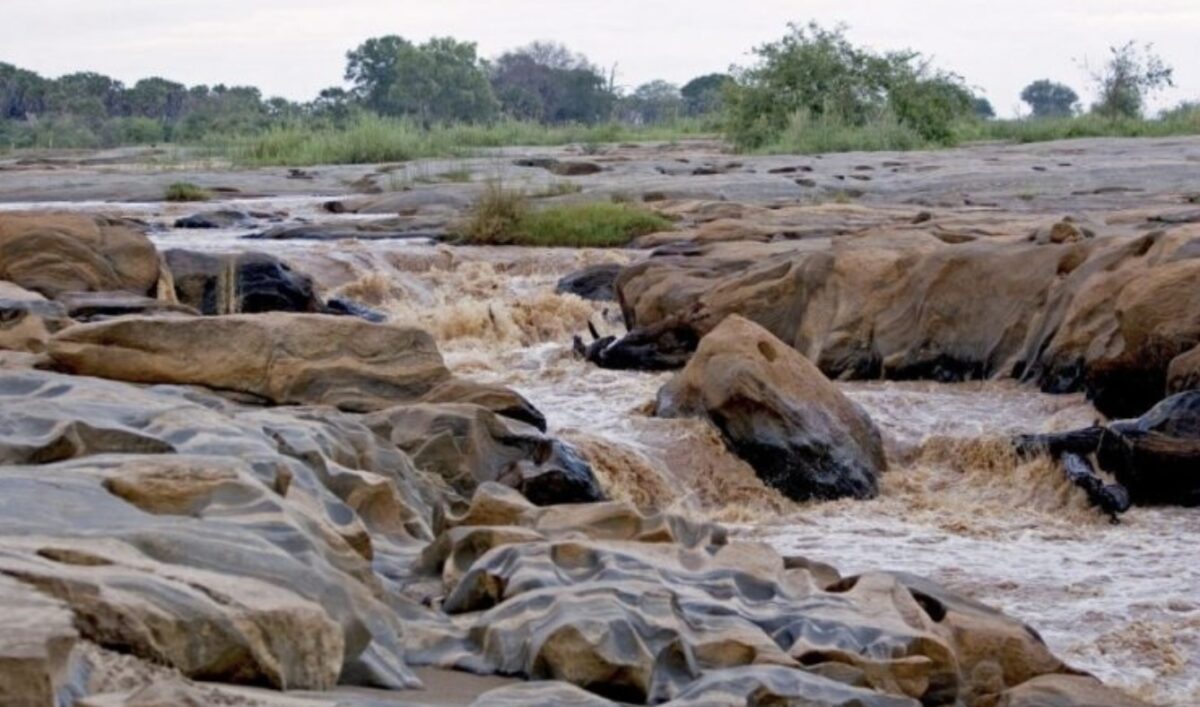
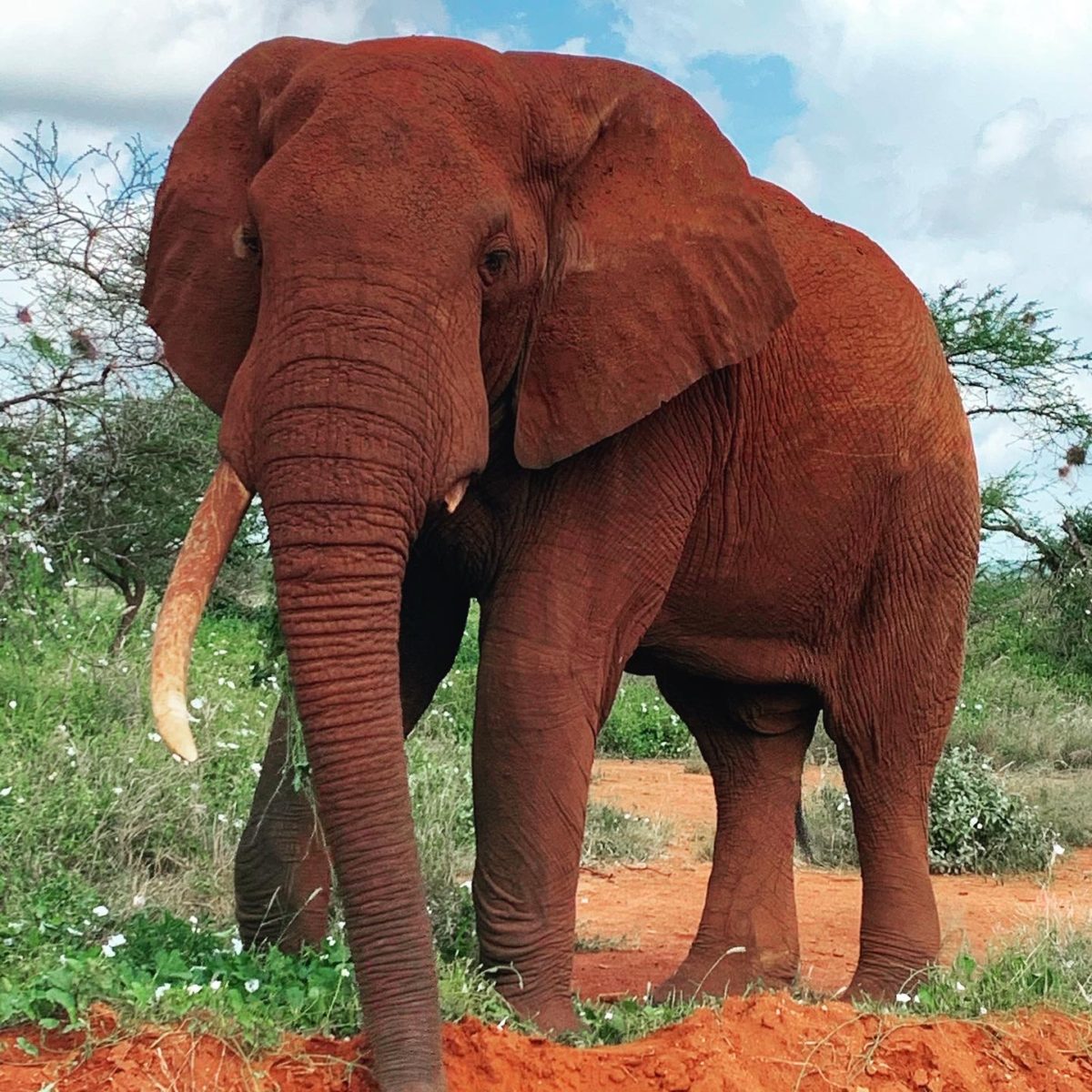
Tsavo East National Park is known for its large groups of ‘red elephants’, the Yatta Plateau , one of the world’s longest lava flows, the endless and impossibly scenic Galana River, and the Luguard Falls.
Tsavo West National Park Kenya
Tsavo West National Park offers you fantastic views over to Mount Kilimanjaro and a more varied landscape. The volcanic activity is clearly visible in Tsavo West National Park with huge lava flows, a rash of volcanic hills, and the Mzima Springs, a series of natural springs that end in a large translucent pool, clear enough to see the resident hippos and crocodiles under the water.
4 Things to do in Tsavo East National Park
Animal Spotting in Tsavo East National park
Take it from the experts, not me. Tsavo East is the better park for animal viewing. This side of the park has less ground cover and trees. Its hectares of barren red soil offers adventurers a good chance of spotting wildlife. Both Tsavo East and West are home to all the Big 5, but I am assured that there are more lions in Tsavo East. So if you are looking to tick buffalo, elephant, lion, leopard and rhino off your list, then head here.
Visit the Lugard Falls in Tsavo East National Park
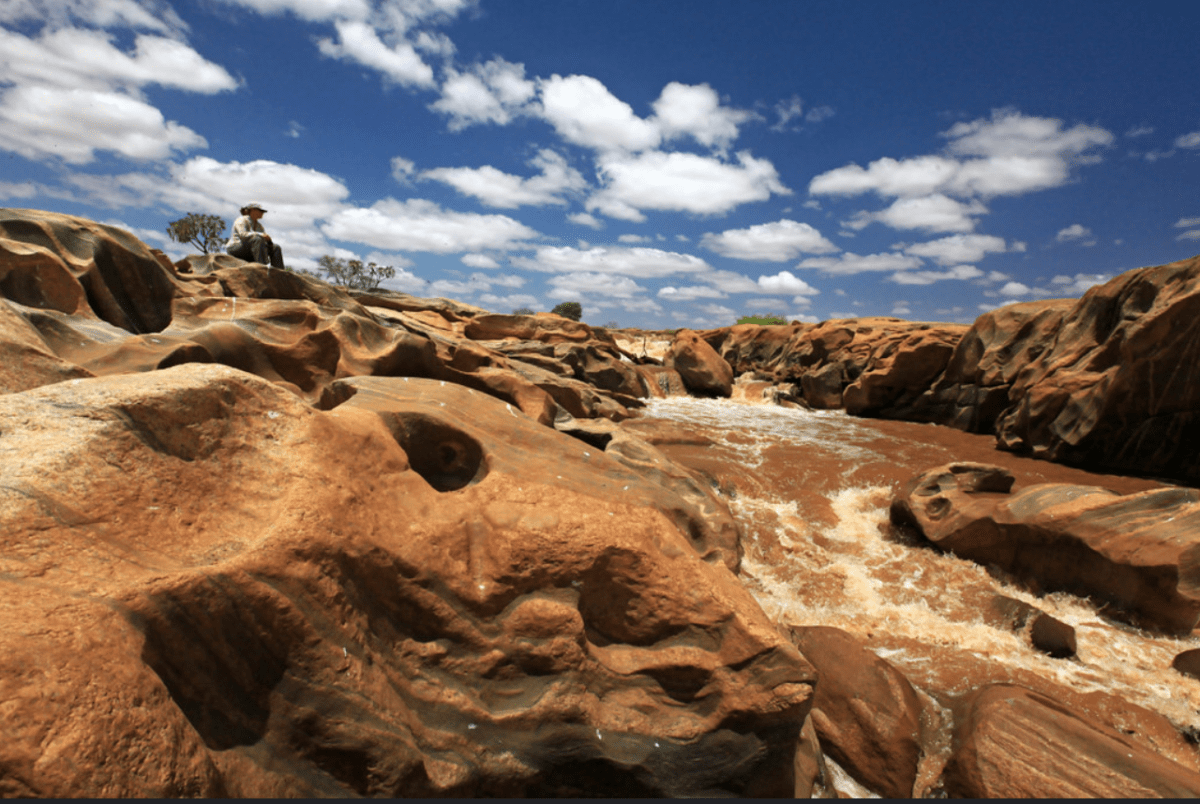
Named after British explorer Frederick Lugard, the Lugard Falls are a stripe of green in the red, red savannah where the Athi and Tsavo rivers join to form the Galena River in Tsavo East. This permanent river is the life source of huge importance to the wildlife, and a great place to spot Tsavo lions as they come to quench their thirst. The Lugard Falls are rapids that have carved unusual rock formations from the volcanic rock. There is a hippo pool and several viewing spots from where you can spot hippo or crocodiles doing their thing.
Explore the Yatta Plateau Lava Flow
The Yatta Plateau is one of the world’s longest lava flows, stretching around 290 kilometres (180 miles). The plateau offers a striking contrast to the surrounding landscapes and is a must-see for geology enthusiasts.
River Walks and Hiking along the Galana River
Tsavo East National Park is a popular shortcut when driving to Watamu. I love it because most of the journey follows the pretty pretty Galana River. So lazily peaceful I just want to get out of the car and lie on its sanded beaches under the giant palms. Of course you can’t. As the primary water source in Tsavo the riverside is packed with ferocious beasts, but grab a guided walking safari and that riverside picnic could be yours.
5 Things To Do In Tsavo West National Park
Make no mistake, Tsavo West National Park still has its fair share of game. The trees, dense vegetation and long grasses in the wet season make it harder, but the animals are here, including several prides of lion. During my visits to Tsavo West National Park I have seen lion, elephant, zebra, giraffe, owls, eagles, vultures, eland, crocodile, hippo, gazelle, impala, oryx, hornbill, and my top spot, the elusive, Wild Dog.

Shetani Lava Flow – Tsavo West National Park
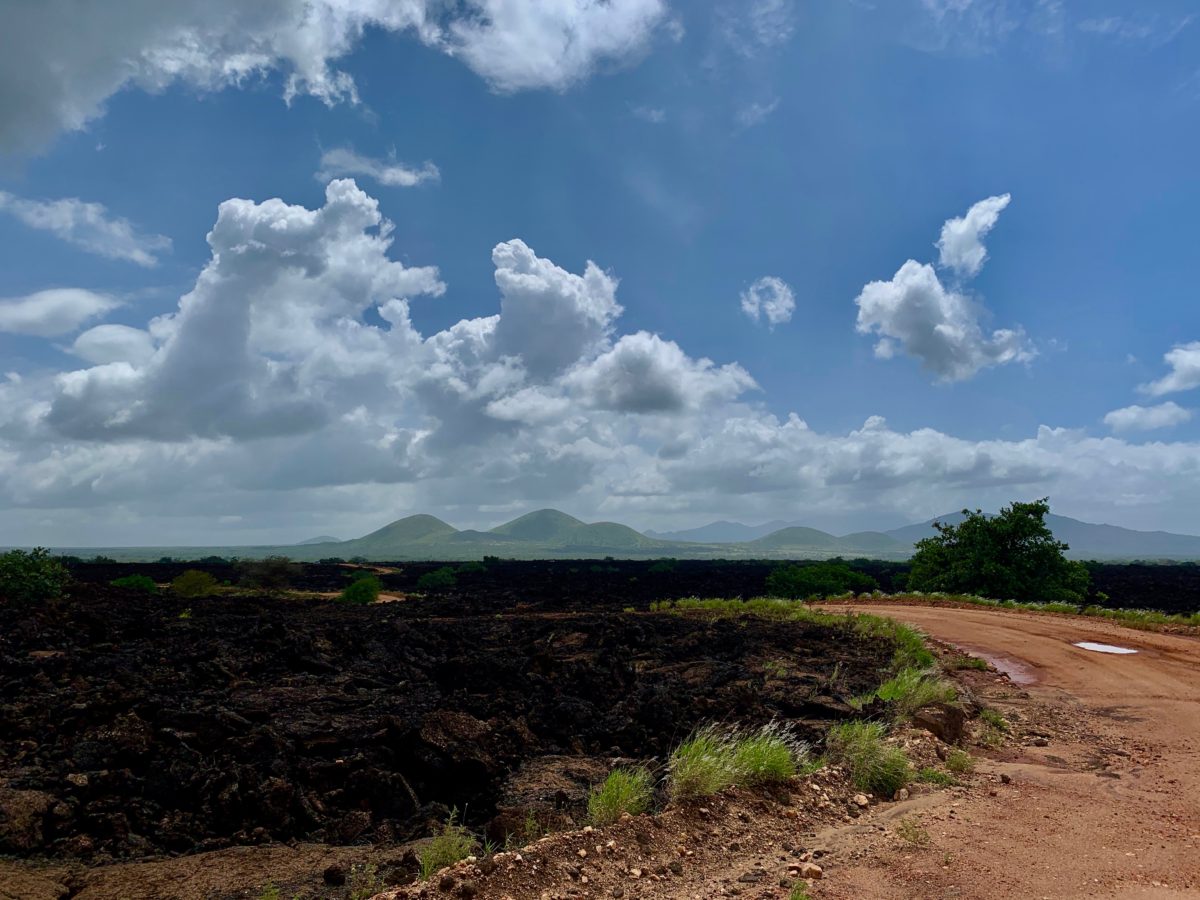
The jagged rocks of the Shetani Lava flow are an awe-inspiring reminder of the power of nature. The stark volcanic landscape still hosts very little plant life even hundreds of years after the last eruption. It is a uncomfortable reminder of the fragility of our human settlements. A harsh landscape of grey-black magma stretches towards the Chyulu Hills volcanoes in the distance. Well worth a visit to this area at the northern border of Tsavo West National Park.
The Shetani Caves at Tsavo West National Park
Very close to the Lava flow are the Shetani caves. Drive up the rarely used track and stop at the stone wall (which used to have a sign but no longer does). Turn around if you reach a fork. The left-hand side is the alighting point for hiking the Chaimu Crater. (best done in the early morning or late at night, as it is punishingly hot). The right-hand side takes you to the top of the Chyulu Hills.
Leave the car at the stone wall and walk up the short hill to the caves. I have to admit, I’m not sure I would have gone in had there not already been a guide showing other people around. The combination of long grass where Tsavo lions could be hiding and a dark, dark cave which may house a hyena or leopard had me quaking in my boots. But in I went. The caves is a 50 metre or tunnel with a fairly difficult descent. Throughout the tunnel, you will find the bones of animals who have been trapped in here, a baby rhino, porcupine, hyena and other unidentifiable bones! Towards the end, a ladder leads you up a steep ascent to the surface. The cave does continue; we didn’t venture further in. My nerves! My nerves!

Mzima Springs at Tsavo West National Park
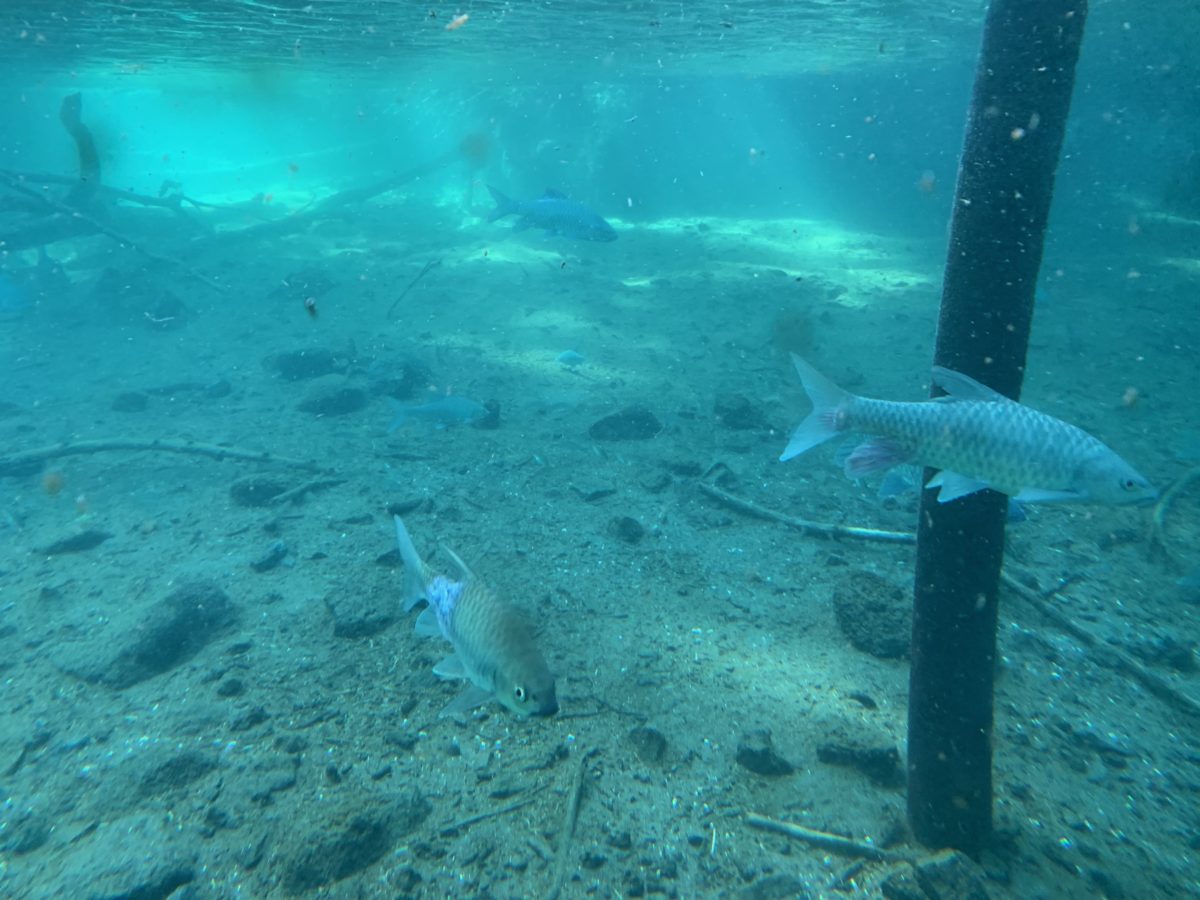
Crystal clear water filtered through volcanic rock from the Chyulu Hills forms this apparently peaceful lake. It’s an idyllic spot with reeds, palm trees and giant eucalyptus bordering the transparent water. It’s only the soldiers with machine guards and the frequent ‘go no further, CROCODILES.’ and ‘ Beware HIPPO’s’ signs that alert you to the animals that call the oasis home. Vervet monkeys and baboons dance in the trees, crocodiles hide in the long grass and hippos fight in the water. Keep your kids close and your wits about you.
Walk the circular route of the boardwalk until you reach a thatched hut where you can descend under the water to watch the fish/crocs/hippos through thick glass windows. It’s wonderful, in its uniquely Kenyan combination of danger and beauty.
Kilaguni Serena Lodge at Tsavo West National Park
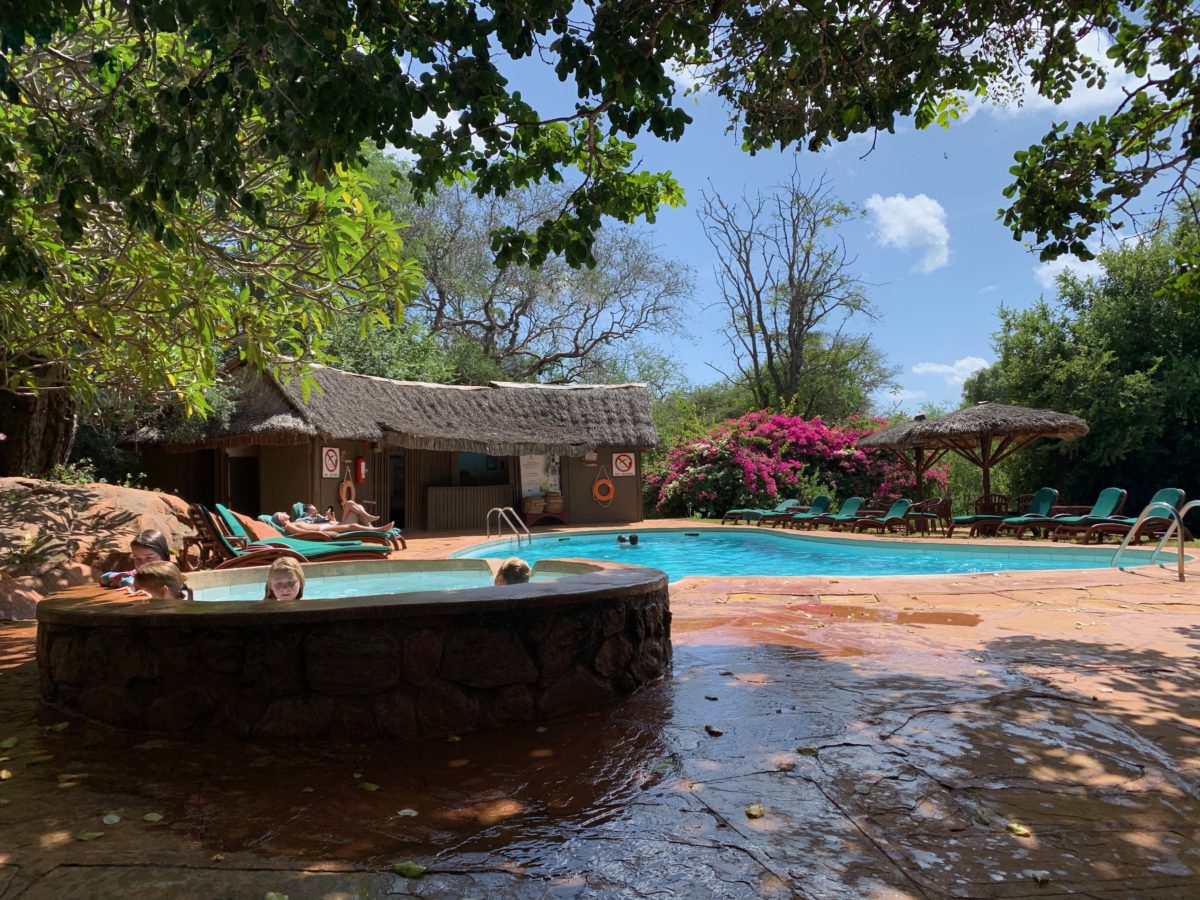
Kilaguni Serena Lodge is a great spot to stop for lunch. For 2500 KSH or 1200 for kids, you can join their lunchtime buffet and stuff your hungry, dust speckled faces until you burst. Afterwards, take your wine to the deck and sip it in the shade whilst watching animals at the watering hole. Then head off to the pool and let the kids splash off some energy whilst you relax on the sun loungers. I’ve not stayed here yet but am very tempted.. and will report back if I do.
Ngulia Rhino Sanctuary
Ngulia Rhino Sanctuary is a fenced area of 90 sq km, heavily guarded with the purpose of protecting the endangered black rhino. Tsavo’s rhinos numbered approx. 7000, 50 years ago, but by 1989 there were only 20 remaining. Their decline is almost entirely because of poaching. The sanctuary started with three rhinos and now boasts 80. A visit here is your best chance of seeing a rhino in Tsavo.
Where to Stay in Tsavo West National Park Kenya
$$$ Finch Hattons – High end, known for its luxurious tents and classic safari experience, Finch Hattons has a natural spring that attracts wildlife, an infinity pool, and a wellness centre. It’s ideal for a more private, exclusive safari.
$$ Kilaguni Serena Safari lodge – Set near a waterhole, Kilaguni Serena offers luxurious rooms with incredible views. It features a large terrace, a pool, and the chance to spot elephants, lions, and other wildlife nearby.
$$ Severin Safari Camp – Located in a secluded area of Tsavo West, Severin offers a true bush experience with comfortable tents and views of Mount Kilimanjaro. It also has a spa and offers activities like game drives and bush walks.
$$ Voyager Ziwani Tented Camp – Situated along a private section of the Sante River, this camp offers waterfront views with easy access to wildlife, including hippos and crocodiles. It’s popular for both day and night game drives.
$$ Maneaters – Very often used as a stop off en route to Mombasa, Watamu, Diani for its proximity to the motorway.
Where to Stay in Tsavo East National Park Kenya
$$$ Satao Camp – Located near a watering hole, this luxury tented camp offers close wildlife encounters. Each tent has a private veranda, and the camp provides game drives and bush dining experiences.
$$$ Ashnil Aruba Lodge – Overlooking Aruba Dam, this lodge is ideal for viewing wildlife near the water. It has comfortable rooms, a swimming pool, and offers guided safaris.
$$ Sentrim Safari Lodge – comfortable, mid-range accommodation located in Tsavo East National Park, near the Voi River.
$$ Voi Wildlife Lodge – Located near the Voi Gate, this lodge has spacious rooms, a pool, spa services, and is popular with families. It also features a waterhole view where animals often gather.
How to get to Tsavo West National Park Kenya
By Road:
- Route: The drive from Nairobi to Tsavo East National Park takes about 5-6 hours (approx. 325 km) along the Nairobi-Mombasa Highway (A109).
- Entry Gates: The main gates for Tsavo West are Mtito Andei Gate and Chyulu Gate, both accessible from the highway.
- Self-Drive: You can rent a 4×4 vehicle for a self-drive safari. The road is mostly paved until you reach the park gates, but a 4×4 is recommended for driving within the park, especially during the rainy season.
By Air:
- Airlines: Various local airlines and charter services, like Safarilink or AirKenya, operate flights to Tsavo.
- Charter or Scheduled Flights: From Wilson Airport in Nairobi, you can fly to one of Tsavo West’s airstrips, such as Kilimanjaro Gate airstrip or Finch Hattons airstrip.
- Flight Duration: The flight takes about 1 hour.
The Madaraka Express (SGR) also known as the Nairobi-Mombasa Standard Gauge Railway (SGR) is an excellent way to travel to the coast and to Tsavo stopping at Mtito Andei. From there, arrange a taxi or transfer to the park entrance.
Travel Time: The train journey takes around 4 hours from Nairobi to Mtito Andei.
How to Get to Tsavo East National Park Kenya
By Road:
- Route: The drive from Nairobi to Tsavo East National Park takes about 5-6 hours (approx. 325 km) along the Nairobi-Mombasa Highway (A109).
- Entry Gates: The main entry gates for Tsavo East are the Voi Gate and Bachuma Gate, which are accessible from the highway.
- Self-Drive: You can rent a 4×4 vehicle for a self-drive safari. The road is mostly paved until you reach the park gates, but a 4×4 is recommended for driving within the park, especially during the rainy season.
By Air:
- Charter or Scheduled Flights: You can fly from Wilson Airport in Nairobi to Tsavo East’s airstrips (e.g., Voi, Sala, or Aruba airstrip).
- Flight Duration: The flight takes about 1 hour.
- Airlines: Various local airlines and charter services, like Safarilink or AirKenya, operate flights to Tsavo.
By Train
- The Madaraka Express (SGR) also known as the Nairobi-Mombasa Standard Gauge Railway (SGR) is an excellent way to travel to the coast and to Tsavo stopping at Voi. From Voi, you can arrange a transfer or taxi to Tsavo East National Park, which is about 5–10 kilometers from the Voi gate.
- Travel Time: The train journey takes around 4-5 hours from Nairobi to Voi.
- Booking: Train tickets can be booked online through Kenya Railways, with both economy and first-class options available.
Further Reading on Safari in Kenya
21 Incredible Family Friendly Resorts in Kenya 2024
39 Unmissable Tourist Attractions in Kenya – 2024
How Much Does a Masai Mara Safari Cost?
The Ultimate 10 Days in Kenya Itinerary 2024
21 Incredible Family Friendly Resorts in Kenya 2024
Book Your Kenya Trip – Insider Tips
Find everything you need for visiting Kenya on my TRAVEL RESOURCES page.
Find everything you need for moving to Kenya in my THE EXPAT GUIDE TO LIVING IN NAIROBI book.
- Kenya Accommodation: Booking.com has the cheapest rates for hotels and guest houses in Kenya.
- Accommodation Reviews: TripAdvisor is my go-to portal for checking reviews on accommodation/restaurants in the local area. I never book without checking TripAdvisor first.
- ESIM: Airalo allows you to access the Internet from virtually any country without paying roaming charges
- Car Rental: Rental Cars is managed by Booking.com – guaranteed reliable.
- Tours and Guides in Kenya : Check out Get Your Guide and Viator – reputable companies that do tours within Kenya and East Africa.
- Travel Insurance: Travel insurance will protect you against illness, injury, theft, and cancellations. I recommend Visitors Coverage, which covers you for East Africa and offers ‘special insurance’ for safaris and adventure sports:
- Visitors Coverage
- Compensair – if you have a cancelled or delayed flight, you may get a refund.
This has reminded me so much of our honeymoon to Kenya, we visited Tsavo East and West on Safari and had such an amazing time! Would love to visit again one day.
I earmarked this post and now just got a chance to read it – and I’m thrilled ‘cos we’ve just paid for our trip to Tsavo and we’re staying at Kilaguni Safari lodge ???? By the way: they have an SGR 2 night special which includes return transfers to SGR; daily game drives including stops on way to the lodge and back to SGR and a nature walk; plus all inclusive package.
Will let you know how it went ????
Pingback: Kenya Itinerary 10 Days: city, safari and beach | The Expat Mummy
Pingback: How to find the Best Hotel in Mombasa | Live Travel Kenya
Pingback: 10 Top Tourist Attractions in Kenya | Live Travel Kenya
Pingback: 10 Top Tourist Attractions in Kenya | The Expat Mummy
Pingback: How to find the Best Hotel in Mombasa | The Expat Mummy
Pingback: Vipingo Ridge Kenya: all you need to know | The Expat Mummy