
This is an updated article on Kimana Sanctuary. As of 2022 you can no longer camp in Kimana, however, this post remains because Kimana is still one of my favourite cheaper and quieter safari getaways near Amboseli. Book accommodation at Kimana House or hold on for their tented camp which has been promised for some years. I’ll keep you posted.
—
Kilimanjaro rises above the plains, bare of snow. Clouds circle her in homage, not just to Mother Mountain but to the glory of nature that gathers at her feet. The saying goes ‘Kilimanjaro is in Tanzania but the best views are from Kenya’ and Kimana Sanctuary testifies to this. Kimana is a lesser-known game reserve and thoroughfare for animals passing between Amboseli and Chyulu Hills/ Tsavo National Parks. The 5700-acre sanctuary is part of an ancient elephant corridor. A place of serene beauty inhabited by most of Kenya’s indigenous animals.

Kimana is a place of differing environments. At the river the green trunks of fever trees line the water, the woods are abundant with zebra, gazelle, baboons, warthogs and myriad birdlife. Red dusted plains are scattered with pumice stone thrown from Kilimanjaro. Savannahs of towering grass shelter cheetah and umbrella acacia’s hid giraffe. In the forest, lions make their home, and everywhere, simply everywhere there are elephants.

Abundant wildlife at Kimana Sanctuary
Kimana doesn’t have a huge amount of cats, although we were lucky enough to spot cheetah and narrowly missed lion, it makes up for it with some of the most abundant wildlife I’ve ever seen. I’ve been to bigger, more popular, more well known and certainly more expensive parks and never seem wildlife is such huge numbers as we did at Kimana. When arriving at our campsite there must have been 200 zebra, antelope, giraffe, wildebeest, and warthog grazing. The woods around our camp simply teemed with animals, a striped bottom, stately horns or elongated neck in view at all times. We saw elephants pass our camp every day and heard hyena circling every night.
We saw cheetah, bat eared fox, black back jackal, hyena and a couple of Verreaux Eagles raising an owl chick in the trees opposite our camp. Bushbabies danced the night away in the trees above our head and a small cat raided our rubbish at night. The baboons were ever present, sunbathing on the banks of the river that promised crocodiles. Yes, Kimana was all about the animals.

Kimana community eco-project and conservation
Kimana is a community Eco project created in 1996. Big Life and the David Sheldrick Wildlife Trust rent the land from local Maasai, who in return receive a much-needed revenue stream from tourism. The Big Life team recognise that preservation of Kimana, as a corridor is crucial. Over the years human settlements have spread allowing the animals only a very narrow strip to pass through. As a result, human-animal conflict is a real and present danger. Local communities will harm or kill animals that ravage their crops or steal livestock. Big Life and the Maasai landowners provide 22 rangers whose job it is to manage the prolific wildlife within the sanctuary and ensure that they are kept away from local villages.
During our visit to Kimana, we were fortunate enough to see Tim, one of the largest tusker elephants in the world. Instantly recognisable by his gargantuan tusks which reach to the floor. Tim is also notable for straying on to farming land and has suffered two grievous spear wounds as a result. The old injury on his back is still visible. Two rangers were with Tim most of the time we were at Kimana, ensuring his slow but steady process remained within the park.

Accommodation at Kimana Sanctuary: Kimana House
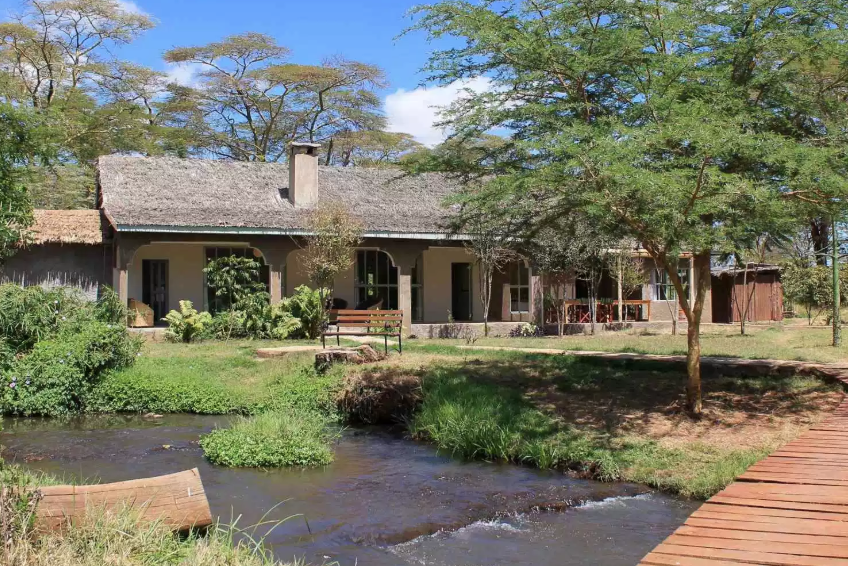
The only accommodation at present is at the magnificent Kimana House. I camped when the few times I visited Kimana but I have seen it in person and it’s gorgeous; shaded by fever trees with a shallow pool in the river for hot days and large lazy veranda for supper and sundowners. The house sleeps 8 people in three double rooms all with ensuite bathroom. It comes with a housekeeper, drinking water, bbq, freezer and solar power
Game Drives at Kimana Sanctuary
Kimana is a corridor, long and thin and small so you can easily cover most of the park in a 2/3 hour game drive. Despite its size, we abandoned plans to visit neighbouring Amboseli, as there was so much variety in the terrain and so much animal life to be seen. A late afternoon / early evening game drive is a must, the sunsets were simply epic. Kilimanjaro showing off in orange and pink tinted skies.
The park roads were excellent at the time of visiting but during heavy rains become waterlogged with some roads inaccessible. I would recommend a 4×4 because you need to drive across a small section of the river at the entrance.

How to get to Kimana Sanctuary
Nairobi to Kimana Sanctuary is an easy 200km – zip down the Mombasa road, turn off at Emali and enjoy the traffic-free final hour. The road takes you past Amboseli entrance, approx. 30km before Kimana, so an easy day trip away. There are many chances to see wildlife along most of the road with frequent elephant crossings. Kimana Sanctuary is past the small town of Intepsei (a good place to stock up on essential food items)
Emali train station is serviced by the SGR train from Nairobi and Mombasa is only an hours drive away.
How much does Kimana Sanctuary cost?
Daily entrance
For Kenyan residents/citizens, the entrance fee is 1000 Ksh | USD $10
Non-residents it is 2500 Ksh | USD $25.
Children under 10 years go free and ages 10-18 pay 50%.
Kimana House
18,000 Ksh | USD $180 per night for 4 guests or less
24,000 Ksh | USD $240 per night for more than 4 guests
You can pay by cash or Mpesa at the gate.
All income is divided between the community and the on-going conservation of the area.
You can book the campsites exclusively for an extra 5000 per day. At the time of visit (May), there was only one other group in the entire place so no need for exclusivity
Further Reading
Book Your Kenya Trip – Insider Tips
Find everything you need for visiting Kenya on my TRAVEL RESOURCES page.
Find everything you need for moving to Kenya in my THE EXPAT GUIDE TO LIVING IN NAIROBI book.
- Kenya Accommodation: Booking.com has the cheapest rates for hotels and guest houses in Kenya.
- Accommodation Reviews: TripAdvisor is my go-to portal for checking reviews on accommodation/restaurants in the local area. I never book without checking TripAdvisor first.
- ESIM: Airalo allows you to access the Internet from virtually any country without paying roaming charges
- Car Rental: Rental Cars is managed by Booking.com – guaranteed reliable.
- Tours and Guides in Kenya : Check out Get Your Guide and Viator – reputable companies that do tours within Kenya and East Africa.
- Travel Insurance: Travel insurance will protect you against illness, injury, theft, and cancellations. I recommend Visitors Coverage, which covers you for East Africa and offers ‘special insurance’ for safaris and adventure sports:
- Visitors Coverage
- Compensair – if you have a cancelled or delayed flight, you may get a refund.
Pingback: SGR train; Nairobi's cheap and easy way to travel to Mombasa
Pingback: Essential things to know before travelling to Kenya | The Expat Mummy
Pingback: Essential things to know before travelling to Kenya | Live Travel Kenya
Pingback: Lodges and Camping in Amboseli National Park | Live Travel Kenya
Pingback: Sanctuary Farm at Lake Naivasha | The Expat Mummy
Pingback: Lodges and Camping in Amboseli National Park | The Expat Mummy
Pingback: 10 Best Safari Parks in Kenya - The Directionally Challenged Traveler
Hi. We are going to Kimana on the back of your review. Please could you advise if you need to book the campsites, and how this can be done? Thanks
Oh im sorry, Ive been away and not seen this. Kimana has sadly stopped the camping, you can now only book the lodge (im unsure if its open yet). its so annoying. There are a few campsites in Amboseli.
Take care Nadine
says the lodge/house is not taking booking in 2024
Really? let me check and update
My destinations of this year includes visiting the place.